
Stop Worrying About Stolen Content. Start Worrying About Who Owns Your Customers
Social media platforms and search engines are transitioning into “Walled Gardens”.
Because their business models depend on keeping users inside their apps to sell ads, they are actively locking down the free pathways that businesses previously used to drive external website traffic.
The Three Drivers of the Shift
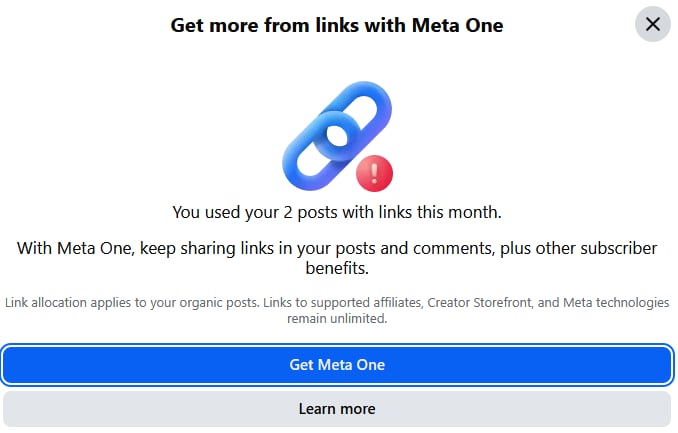
- Monetizing Organic Reach (The Meta One Model) Platforms are shifting basic capabilities behind paywalls. Under systems like Meta One, free and entry-level creator or business accounts are capped at 2 external link posts per month across posts and comments. To post more, businesses must pay escalating monthly subscription fees.
- Algorithmic Suppression of Outbound Links Even on platforms without strict post caps (like LinkedIn or X), algorithms penalize posts containing external links, giving them significantly lower organic reach than native text, image, or video posts.
- Search Engine Zero-Click Answers (AI Overviews) Search engines like Google increasingly present AI summaries directly at the top of search results. Users get their answers on the search page without ever clicking through to the original website.
The Dilemma for Small Online Businesses
Local physical businesses can fall back on local visibility, foot traffic, or community word-of-mouth. However, purely online or international businesses face a severe squeeze:
- Traditional Free SEO & Social Reach are Diminishing: You can no longer rely on creating content solely to push feed scrollers directly to your website.
- Ad Costs & Subscriptions are Escalating: Relying exclusively on paid ads or platform subscription tiers strains small margins.
To adapt, online businesses are shifting away from using social media as a direct “traffic signpost” and instead using zero-click native content to build brand awareness, while driving audiences toward owned distribution channels (such as direct email lists and private messaging communities).
To survive and grow without a massive ad budget, small online businesses are pivoting to four core strategies:
1. Build “Owned” Distribution Channels (Move Off Rented Ground)
When algorithms change, you lose access to your audience overnight. The top priority for an online business is shifting focus from acquiring “followers” or “clicks” to acquiring direct contacts.
- Email & SMS Newsletters: Email remains the only channel where you own 100% of the relationship with no algorithm, AI overview, or link limit standing in between. Offer high-value lead magnets (free tools, exclusive toolkits, deep-dive guides) to convert one-time visitors into email subscribers immediately.
- Direct Messaging Communities: Build private spaces (Discord, Telegram, WhatsApp Communities, or private newsletters) where updates go directly to subscribers’ notifications rather than competing in a feed.
2. Practice “Zero-Click Marketing” & Branded Search
Instead of using content to drive traffic, use zero-click content to build brand awareness so users search for you by name.
- The Strategy: Publish complete, high-value insights, video breakdowns, or tutorials natively directly on feeds (LinkedIn, YouTube, X, Instagram) without links.
- The Goal: When users consume enough valuable content directly on their feed, they develop brand recall. When they need your service or product, they type [Your Brand Name] into Google rather than searching generic keywords like “best software for X.”
- Why it works: Branded search queries have nearly a 100% click-through rate because Google cannot replace a specific company name with a generic AI summary.
Be prepared for attribution to become less straightforward: zero-click awareness breaks traditional last-touch analytics, requiring a more senior approach that measures success through blended revenue, qualitative feedback and branded search volume rather than simple link-click tracking.
3. Create “Un-Summarizable” Content
Google’s AI Overviews and chat tools easily extract basic factual information (e.g., “how to do X step-by-step”). To earn actual clicks on organic search, your online content must offer what AI cannot summarize:
- Original Data & Case Studies: Conduct original research, surveys, or share real revenue/project numbers.
- Niche & Deep Technical Expertise: In-depth, nuanced teardowns and original expert opinions.
- Interactive Tools: Calculators, web apps, downloadable templates, or software trials that require visiting your actual site to use.
4. Partner with Micro-Influencers & Communities
Rather than spending money on platform ads or subscription plans (like Meta One), leverage established communities:
- Affiliate & Co-Marketing: Partner with newsletter creators, niche podcasters, or micro-influencers in your international market. They already have the direct line (email feeds, audio listeners) to your exact audience.
- Community Platforms: Actively participate natively in spaces where intent-driven discussions happen, such as specialized Reddit communities, forum boards, or industry-specific Slack groups.
Summary Checklist for Small Online Businesses
| Old Way (Failing) | New Way (Working) |
| Post links on social media leading to a blog | Deliver zero-click value natively on social media |
| Target generic SEO keywords for blog traffic | Target branded SEO & create un-summarizable tools/data |
| Rely on social followers for repeat visits | Drive every user toward an owned Email / SMS list |
| Rely solely on algorithm distribution | Partner with niche newsletter creators & podcasters |
*Header image – RevEmma pixabay
Leave a Reply