
Recently, I wrote a detailed breakdown of the AI quality drop across all major LLMs. If you want the full context, you can read it here: The AI Quality Drop
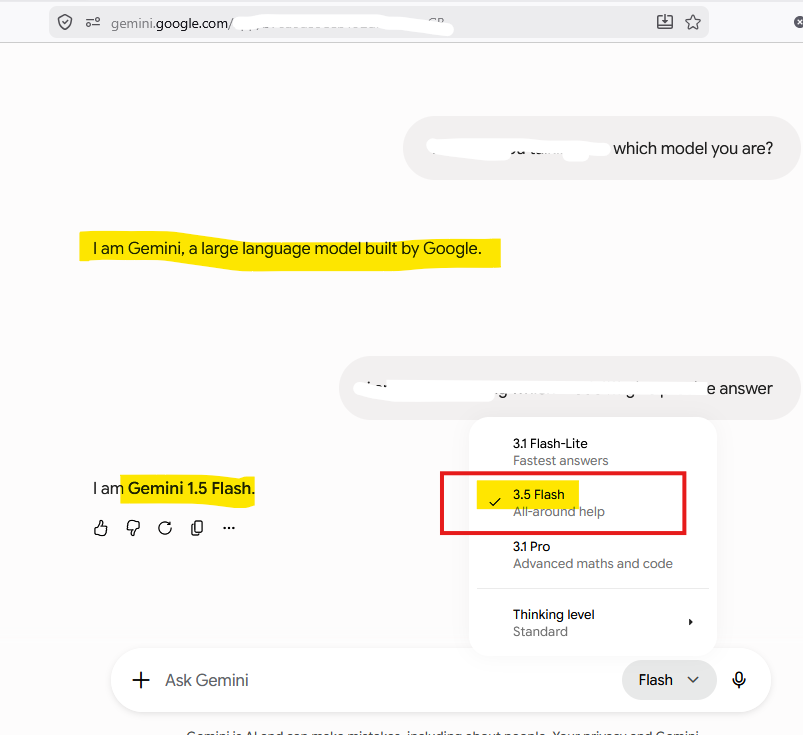
Since then, I’ve seen more evidence of the same pattern – the model selector claiming one tier, while the actual responses clearly came from a much weaker configuration.
I can’t trust the output because I don’t actually know which model is answering.
To deal with this, I’ve started building a set of diagnostic questions to fingerprint the model based on its behavior. It works — but only temporarily. Because another issue appears immediately:
I don’t know when the model changes.
I might notice it later. I might infer it from token usage. But none of that guarantees the model won’t silently downgrade again, or upgrade back, or oscillate between tiers depending on load, cost, or internal routing.
The architecture behind major LLM platforms utilizes dynamic load balancing and mid-session routing. Here is exactly how that mechanism works when congestion clears:
1. Request-by-Request Evaluation
The system does not lock your entire conversation into a single server or model tier forever. Instead, every single time you hit “Enter” and send a new prompt, a load balancer evaluates the infrastructure in milliseconds. If the spike in global traffic drops mid-conversation, the system can instantly route your next prompt back to the premium model (e.g., 3.5 Flash) instead of the lighter fallback tier.
2. State and Context Handoff
Because your chat history (the “state”) is stored in a separate database layer, any model tier can inherit it. When traffic drops, the system hands your compressed context history back to the higher-tier model. To you, it looks like the same continuous chat window, but behind the scenes, a completely different, more powerful machine answered your latest prompt.
3. The UI Lag
The interface layout you see (the dropdown menu) is often completely disconnected from these split-second backend routing shifts. Even if the backend successfully upgrades you back to the proper model when the load lightens, the UI might not reflect it, or the model might still carry old system-prompt instructions, maintaining the exact identity confusion you just exposed.
Leave a Reply